
Twiggs County Criminal Court Files
A criminal court record in Twiggs County is the case-level file kept by the court after criminal charges are filed or carried forward. For felony prosecutions, the key local venue is Superior Court, Georgia's trial court of general jurisdiction. The Clerk of Superior Court manages Superior Court and Juvenile Court records for Twiggs County, according to the GSCCCA clerk entry. Magistrate Court also matters because it handles arrest warrants, search warrants, pre-warrant hearings, first appearances, bond hearings, and preliminary hearings before a case may move deeper into the criminal process.
The file can include an accusation or indictment, the charge list, bond orders, arraignment entries, motions, orders, plea entries, trial activity, disposition, sentence, probation terms, restitution, and court costs. The jail roster may show a charge snapshot after arrest, but it is not the final criminal case file. For a closer look at the arrest-to-charge path, use the Twiggs County arrest records and court charges material. For the broader civil, probate, traffic, and family record map, use the all-court record channels.
The PACGA Twiggs County prosecutor listing identifies Harold McLendon as District Attorney for the Dublin Judicial Circuit, the circuit that includes Twiggs County.

That prosecutor listing is important because formal charging decisions, discovery routing, and many record restriction requests run through the prosecution side rather than the jail roster.
Search Twiggs County Criminal Records
Twiggs County does not have one confirmed county-run public portal that covers every Superior Court criminal docket. The practical search path starts with the court level. Superior Court felony files and related criminal records route to the Clerk of Superior Court at the courthouse in Jeffersonville. Magistrate Court records may hold the earliest criminal stage, including warrant, first appearance, bond, and preliminary hearing material. Georgia Courts e-access may redirect users to provider sites and may require an account, and PeachCourt is used in Georgia for civil and criminal e-filing and document access, but the research did not confirm a dedicated Twiggs Superior public docket search.
- Identify whether the matter is a Superior Court felony case, a Magistrate Court warrant or first appearance, a Probate traffic matter, or a municipal ordinance matter.
- For Superior Court criminal files, contact the Clerk of Superior Court at 425 Railroad Street North or by phone at (478) 945-3350.
- For early criminal proceedings, call Twiggs County Magistrate Court at (478) 945-3428 and ask about warrants, first appearances, bond, or preliminary hearings.
- Use the current inmates roster only as a custody and charge snapshot, then confirm final disposition with the court clerk.
- For certified copies, ask the office that holds the file about copy cost, payment method, and whether any part is sealed or restricted.
The Dublin Judicial Circuit District Attorney website is part of the criminal case access picture because the DA decides how many Twiggs County charges are prosecuted and handles discovery routes for pending cases.

When a person is awaiting trial, the sheriff open-records page says requests beyond an initial incident report must go through the District Attorney by proper discovery motions.
Twiggs County Criminal Case Flow
A criminal case can start outside the Superior Court file. Magistrate Court may issue an arrest warrant or search warrant, conduct a pre-warrant hearing, hold a first appearance, set bond, or conduct a preliminary hearing. If a felony prosecution goes forward, the criminal court record in Superior Court may later show the accusation or indictment, arraignment, motions, hearing entries, plea or trial, disposition, and sentence. Each step can create a docket entry or order, but not every early law-enforcement document becomes a public court record.
Case flow: Charges Filed › Arraignment › Pretrial and Motions › Plea or Trial › Disposition › Sentencing
| Stage | What the Criminal Record May Show |
|---|---|
| Charges filed | Accusation, indictment, complaint history, statute, count, charge description, court, and defendant name. |
| Arraignment | The defendant's first formal court response to the charge, often guilty, not guilty, or nolo contendere. |
| Pretrial and motions | Requests for rulings, continuances, suppression issues, discovery disputes, bond orders, and hearing dates. |
| Plea or trial | A negotiated plea, bench or jury trial activity, verdict, acquittal, dismissal, or nolle prosequi entry. |
| Disposition and sentence | Final outcome, sentence terms, probation, restitution, fines, costs, and later modification or revocation entries. |
Note: Magistrate Court is not a court of record, so final felony outcomes must be checked with the Superior Court file.
What Twiggs County Criminal Records Show
The record fields vary by court and stage. Twiggs research confirmed that the public jail roster shows warrant numbers, statutes, descriptions, misdemeanor or felony indicators, courts, bond totals, and arrest dates. A final criminal court file may add the case number, indictment or accusation, docket events, plea, disposition, sentence, probation terms, and court costs. No official Twiggs Superior case-number format was located, so warrant-number formats from the roster should not be treated as final Superior Court case numbers.
| Field | What It Means in a Criminal Case |
|---|---|
| Case number | The court's tracking number for the filed case, when assigned by the court office. |
| Defendant | The person accused in the criminal case. |
| Charge | The statute, count, and description filed or carried forward in court. |
| Plea | The defendant's answer to the charge, such as guilty, not guilty, or nolo contendere. |
| Docket entry | A chronological record of filings, hearings, orders, continuances, and court actions. |
| Disposition | The outcome of a charge or case, including guilty, not guilty, dismissed, or nolle prosequi. |
| Sentence | Punishment or conditions ordered after conviction, such as jail, probation, restitution, fines, or court costs. |
The Dublin Circuit Public Defender page identifies Clay Tapley as Circuit Public Defender and lists Twiggs County among the served counties.
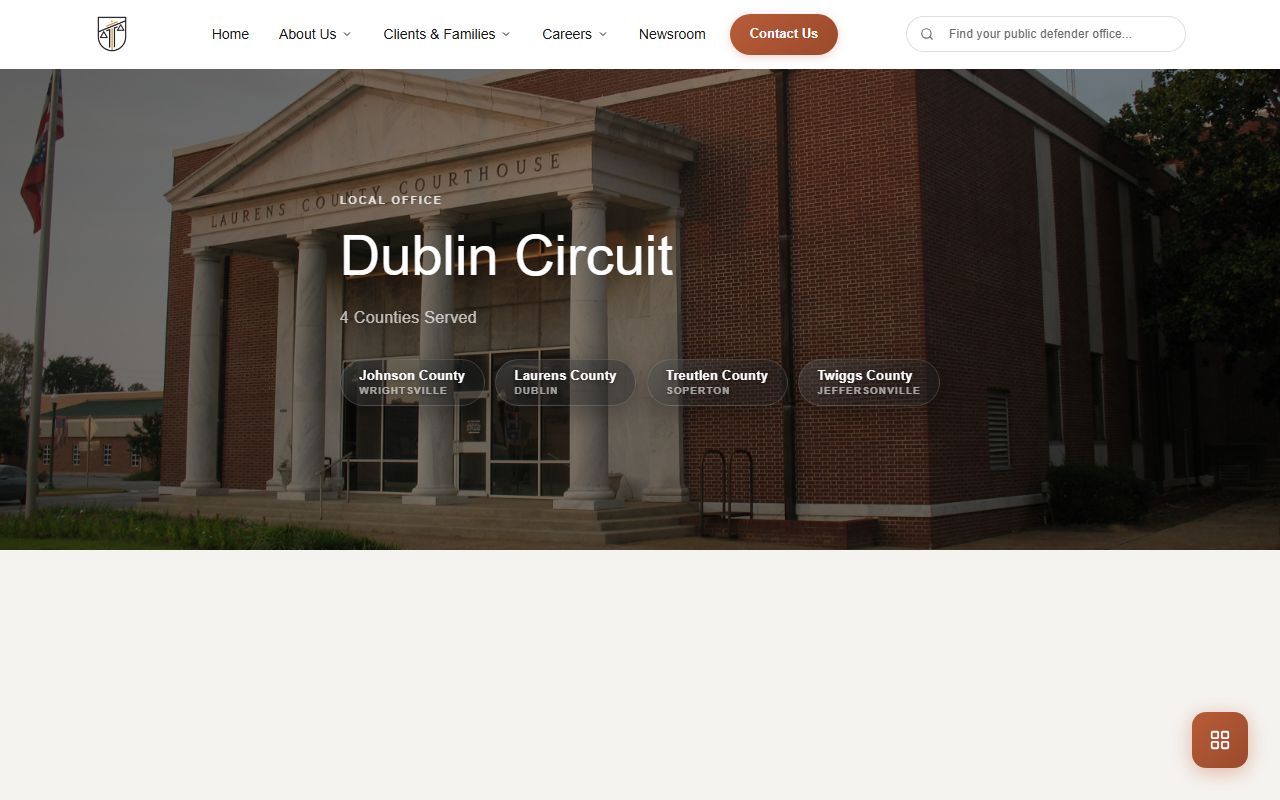
Public defender information matters when a record search involves pending charges, bond, arraignment, eligibility for counsel, or defense-side case access.
Twiggs County Charges vs Convictions
A charge is an accusation. A conviction is a final outcome after a guilty plea, guilty verdict, or other court finding that creates a conviction. Twiggs County criminal records can show charges that were dismissed, reduced, amended, or not prosecuted. The jail roster can show a charge and warrant number soon after arrest, but the criminal court record must be read through the disposition and sentence before anyone treats it as a conviction.
| Point | Charge | Conviction |
|---|---|---|
| Meaning | An accusation filed or listed after arrest or charging review. | A final court outcome based on plea, verdict, or finding. |
| Where it appears | Jail roster, warrant records, complaint, accusation, indictment, and early docket entries. | Disposition, sentence, final judgment, probation, or conviction report. |
| Can it change? | Yes. It may be amended, reduced, dismissed, or not prosecuted. | It can be appealed, modified, restricted in some cases, or followed by sentence activity. |
| How to verify | Check the court file and prosecutor action. | Read the final disposition and sentencing entries from the court record. |
Public Access to Twiggs Criminal Records
Georgia's Open Records Act favors public inspection of public records unless a specific exemption applies. The sheriff's open-records workflow is the clearest written local example: requests must be in writing, the custodian responds within three business days excluding weekends and holidays, and the office may estimate costs before processing. Court files are different from sheriff files, so users should start with the court office that created the record rather than using a sheriff form for every criminal court request.
Key access rules:
O.C.G.A. 50-18-70 states Georgia's policy favoring open public records unless law closes or limits access.
O.C.G.A. 50-18-72 is cited by the Twiggs Sheriff's Office for records that may need redaction or withholding because of legal or sensitive content.
O.C.G.A. 15-11-700 is important for juvenile access, which is not the same as adult criminal court access.
For a federal criminal case tied to Twiggs County conduct, the county court file is not the search path. Federal cases route to the U.S. District Court for the Middle District of Georgia, usually through PACER or the federal court clerk. The U.S. Attorney for the Middle District of Georgia is the federal prosecution office, separate from the Dublin Judicial Circuit District Attorney.
Federal prosecution information should not be mixed with Twiggs County Superior Court records unless the case actually moved into federal court.
Sealed vs Restricted Criminal Records
Georgia often uses the term record restriction rather than expungement. The GBI explains that eligible criminal history records may be restricted for non-criminal justice purposes under O.C.G.A. 35-3-37, but restricted records are not permanently destroyed and can remain available to courts and criminal justice agencies. That distinction matters for Twiggs County criminal court records because a criminal history restriction may not erase every court docket entry or public record that exists in another office.
| Point | Sealed or Restricted | Expunged or Deleted |
|---|---|---|
| Georgia wording | Record restriction is the common Georgia term for limiting public criminal history access. | Georgia.gov states restricted records are not permanently deleted or destroyed. |
| Who may still see it | Judicial officials and criminal justice agencies may still have access. | Do not assume deletion unless a specific court order and agency process say so. |
| Local route | Post-July 1, 2013 requests generally go through the prosecutor for eligible cases. | A separate court sealing issue may remain if court records still show charge details. |
| Common limits | Juvenile, adoption, mental health, pending discovery, and sensitive identifiers may be restricted. | Public request forms should not be used to bypass sealed or confidential files. |
For arrests before July 1, 2013, GBI says restriction requests start with the arresting agency. For later arrests, the person must contact the prosecutor. In Twiggs County, that can mean the Dublin Judicial Circuit District Attorney for qualifying local cases. The sheriff forms page links a Request to Restrict Record Form for sheriff-side records, but the court file may require separate action if public court entries remain.